2026-10-10 ·
Bellingham Seasonal Roof Maintenance Checklist (Spring/Fall)
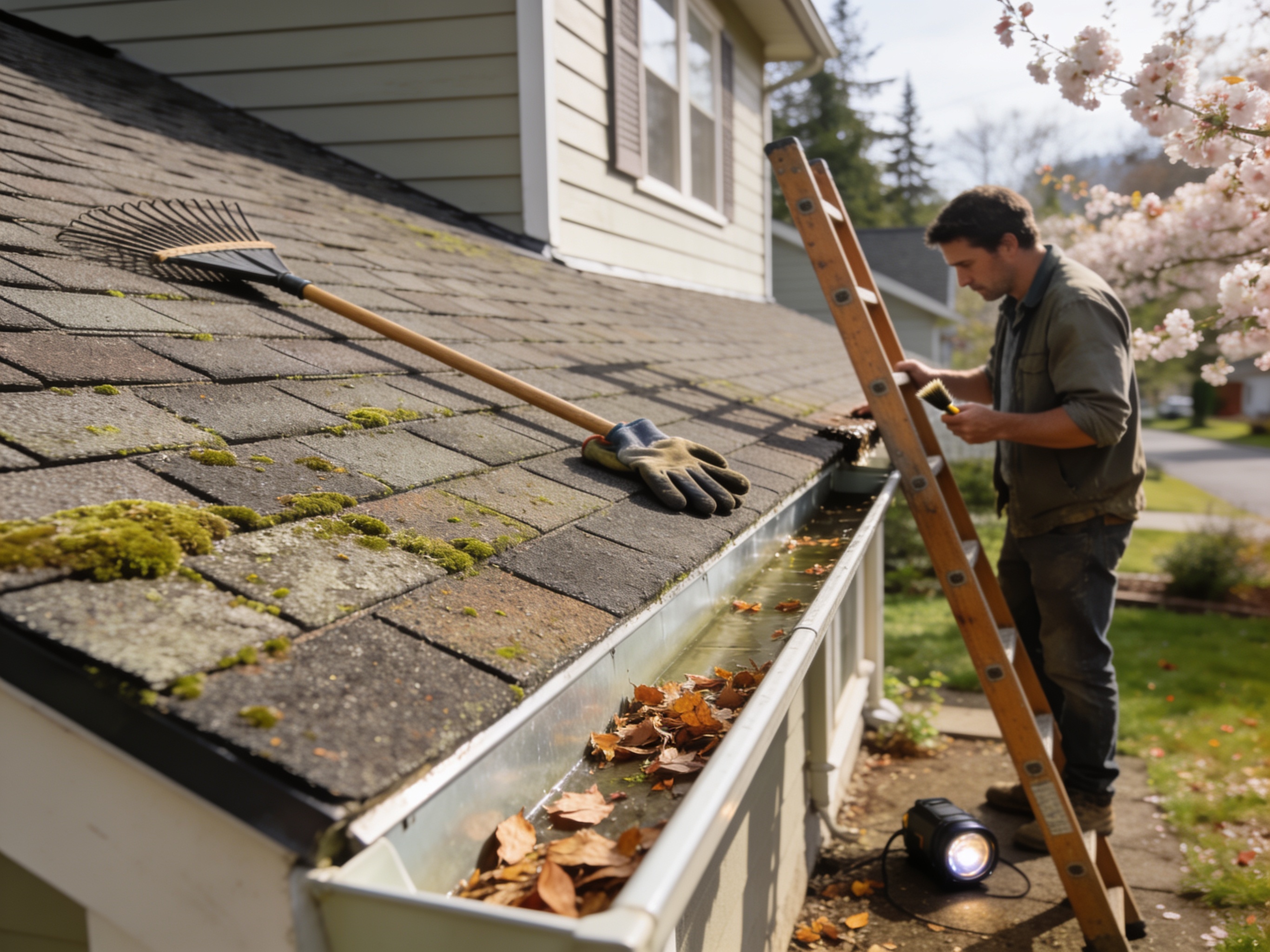
Bellingham roofs need targeted checks twice a year because mild wet winters bring constant moisture that accelerates shingle wear and moss growth while comfortable summers allow safe inspection time before the next rain cycle begins.
Spring Roof Inspection Steps
After winter rains taper off, start at ground level and scan for missing or curled shingles on homes in Sehome near Western Washington University where older stock often shows wear first. Walk the perimeter and note any debris buildup around skylights or vents that can trap water against flashing. Check gutters for sagging or separation, especially on houses in Fairhaven where coastal winds push leaves and needles into downspouts. Clear the debris and flush lines so spring rains drain freely instead of backing up under shingles. Inspect attic spaces for daylight spots or dark stains on sheathing that signal past moisture entry from the heavy winter loads typical in Whatcom County. Ice dam removal and prevention often becomes necessary when spring melt reveals hidden damage along eaves.
Measure any soft spots in the decking by pressing firmly with a broom handle; areas that give indicate rot that started during prolonged winter saturation. Homeowners in York and Happy Valley should pay extra attention to south-facing slopes that receive more sun exposure and therefore dry faster, sometimes hiding edge leaks until water reaches interior ceilings. Document every finding with photos and dates so patterns emerge over multiple seasons. This spring pass usually takes two to three hours on a single-story home and catches 80 percent of problems before they require full roof leak repair.
Fall Preparations Before Wet Weather
Before the first prolonged rains arrive, focus on sealing entry points and ensuring water sheds away from the structure. In Cornwall Park and Barkley, where mature trees drop heavy loads of needles, remove all organic matter from valleys and around penetrations so it cannot hold moisture against the roof surface through winter. Re-secure any loose ridge cap shingles loosened by summer heat expansion. Homeowners near Boulevard Park often find that constant salt air from Bellingham Bay corrodes metal flashings faster, so check for rust streaks and replace deteriorated pieces before winter windstorms arrive. Gutter and downspout repair at this stage prevents overflow that drives water under eaves during the eight to ten inches of monthly rain common from October through March.
Test attic ventilation to confirm moisture can escape; blocked soffits in older Downtown Bellingham homes trap humidity that condenses on the underside of the roof deck. Trim branches that overhang the roofline by at least six feet so winter storms do not drop limbs onto shingles. These fall tasks reduce the chance of emergency calls for roof leak detection and inspection once temperatures drop and leaks become harder to trace.
Neighborhood-Specific Realities in Whatcom County
Homes in Ferndale, Lynden and Blaine share the same wet climate yet differ in roof age and pitch. Many properties built before 1980 in these towns have three-tab shingles that reach the end of their 15-to-20-year lifespan faster when moss holds water against the surface. Steeper roofs in Happy Valley shed water better but collect more debris in valleys during fall winds. Flat or low-slope sections common on additions in Sunnyland require extra attention to ponding water that can freeze and expand during rare cold snaps. Checking these details each season keeps small issues from becoming roof leak repair projects after the next storm.
Knowing When Professional Help Is Needed
If spring or fall inspection reveals widespread granule loss, multiple soft spots, or active leaks during light rain, schedule a full evaluation rather than attempting temporary fixes. Bellingham's combination of frequent drizzle and occasional wind events means small flashing failures quickly worsen once sustained rain returns. How coastal windstorms damage roofs in Bellingham explains why certain neighborhoods see more edge and ridge damage each year. Regular seasonal maintenance performed by an owner-operated local crew keeps most homes leak-free through the wet months without unnecessary replacements.